

That Feeling When You Open the Pantry Door… and Sigh
Let’s be honest for a moment. Have you ever stood in front of your pantry, ready to whip up a delicious meal, only to be met with a jumble of half-empty bags, precariously stacked cans, and a mysterious sticky spot on the back shelf? You open the door, and instead of inspiration, you feel a wave of… well, dread. If you’re nodding along, please know you are not alone! I have been there more times than I can count.
For me, Gifty, cooking is all about joy, creativity, and love. It’s my mission to bring that feeling into every kitchen. But a chaotic pantry can suck the joy right out of the process. It turns a creative adventure into a frustrating scavenger hunt. I remember one particularly memorable afternoon when a precariously balanced bag of flour decided to give up the ghost, creating a white cloud that settled over everything. It was my breaking point. I knew something had to change.
That flour explosion was the beginning of my journey to master my small-but-mighty pantry. It wasn’t about achieving Pinterest-perfect, color-coded perfection (though it does look lovely!). It was about creating a system that worked for me, making it easier to find what I need, see what I have, and ultimately, spend less time searching and more time cooking. These aren’t just small kitchen organization ideas; they are strategies that will genuinely make your life easier and bring the fun back into your food prep. So, roll up your sleeves, put on some good music, and let’s tackle that pantry together!
1. The Great Pantry Empty-Out
I know, I know. This is the step everyone wants to skip, but I promise you, it’s the most important one. You cannot organize clutter. You have to start with a clean slate. Take a deep breath and pull everything out of your pantry. Yes, everything. Set it all out on your counters or your dining table. It’s going to look overwhelming for a minute, but trust the process. This is the first, most crucial step toward pantry peace.
2. The Ruthless (but Necessary) Declutter
With everything out in the open, it’s time to sort. Grab a trash bag and a box for donations. Go through every single item and ask yourself:
- Is it expired? Be ruthless! That can of water chestnuts from 2018 has got to go.
- Will I honestly ever use this? That jar of specialty olives you bought for one recipe two years ago? If you haven’t used it by now, you probably won’t. Let it go.
- Do I have multiples? If you discovered you have four half-used bottles of soy sauce, consolidate them if you can, or at least group them together so you use them up before buying more.
While you’re at it, give those shelves a good wipe-down. There’s nothing better than starting with a sparkling clean space.
3. Embrace Clear Containers
This was an absolute game-changer for me. Decanting dry goods like flour, sugar, oats, pasta, and rice into clear, airtight containers is one of the best things you can do for pantry efficiency. Why? First, you can see exactly how much you have at a glance, so you’re less likely to run out mid-recipe. Second, it keeps food fresher for longer. And third, it just looks so wonderfully tidy and cohesive!
You don’t need to buy the most expensive set, either. I’ve found great options at home goods stores and even supermarkets. Knowing I have all the ingredients I need, clearly visible and ready to go, makes whipping up a batch of my easy no-knead focaccia bread for beginners feel effortless.
4. Label Everything (Like You Mean It)
Now that your goods are in beautiful clear containers, don’t skip this step! You might think you’ll remember which white powder is baking soda and which is cornstarch, but in the heat of a cooking moment, mistakes can happen. A simple label is your best friend. I love using a simple label maker for a clean look, but a chalk marker on a reusable label or even masking tape and a sharpie works just as well. The goal is clarity, not perfection.
5. Create Smart Zones
Think of your pantry like a tiny supermarket with aisles designed for efficiency. Grouping similar items together into “zones” will change the way you cook. Instead of scanning the entire pantry for cumin, you’ll just go to your “Spices & Seasonings” zone. This is the heart of how to organize a small pantry for efficiency.
My Favorite Pantry Zones:
- Baking Zone: Flours, sugars, baking soda/powder, chocolate chips, vanilla extract.
- Weeknight Warriors: Pasta, rice, quinoa, canned tomatoes, broths, and beans.
- Oils & Vinegars: Keep all your cooking oils, vinegars, and sauces together.
- Breakfast Station: Oats, cereals, pancake mix, syrup, and honey.
- Snacks: A designated basket or shelf for crackers, nuts, and granola bars.
6. Go Vertical! Use Every Inch
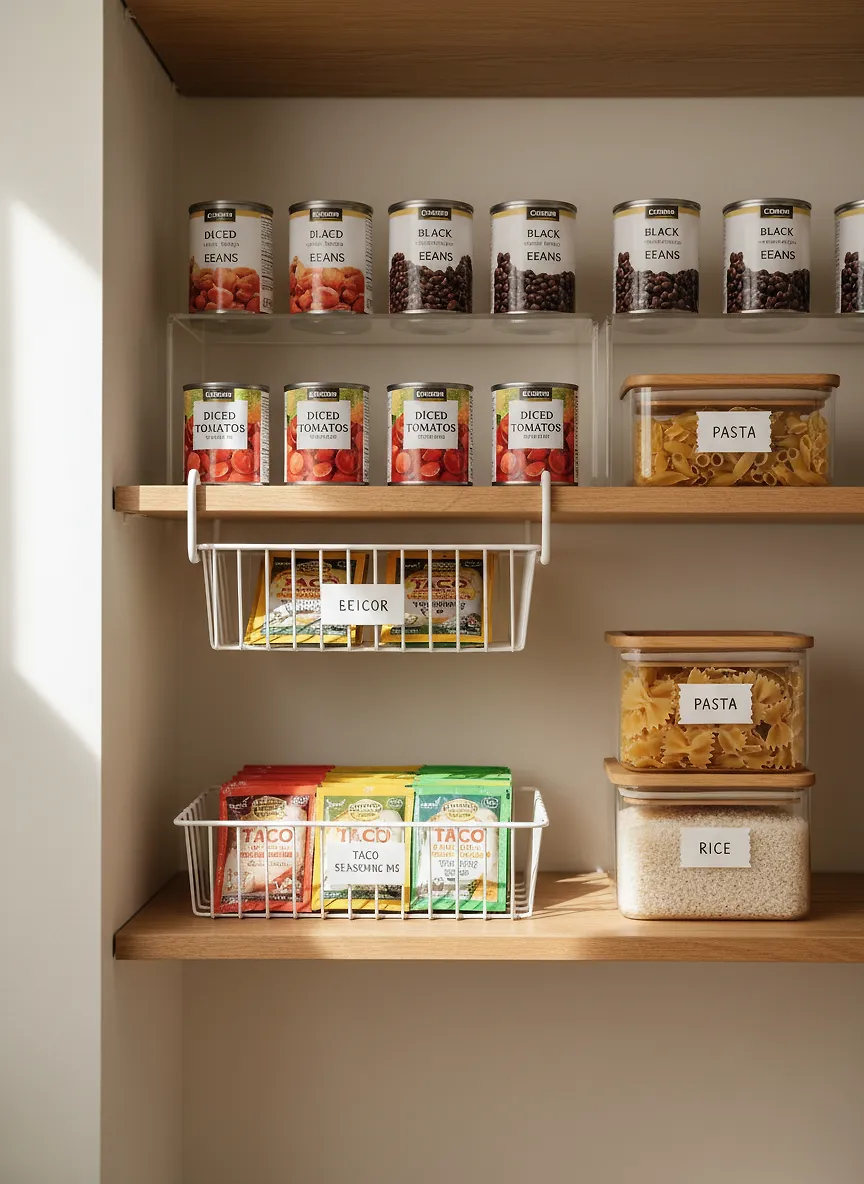
In a small pantry, vertical space is gold. Most pantries have a lot of wasted air between shelves. It’s time to claim that space! Shelf risers are a miracle for doubling your storage for cans and jars. Under-shelf baskets can hold packets and small bags. And stackable bins are perfect for creating modular, customized storage. Look up, look down—there’s probably space you’re not using.
7. Don’t Forget the Door
The back of your pantry door is prime real estate! An over-the-door organizer is one of the best investments for a small kitchen. It’s the perfect place for spices (so you can actually see them all!), small jars of jam, packets of seasoning, and other small items that tend to get lost on a deep shelf. It frees up so much shelf space and puts your most-used seasonings right at your fingertips.
8. Baskets and Bins Are Your Best Friends
For all those items that don’t fit neatly into clear containers—think bags of chips, pouches of tuna, seasoning packets, or extra boxes of tea—bins and baskets are the answer. Instead of a jumble of loose items, you have one neat basket. When you need something, you just pull the whole basket out, grab what you need, and slide it back in. It’s like creating little drawers on your shelves. I use a wire basket for all my potatoes, onions, and garlic—it keeps them contained and allows for air circulation.
9. Implement a “First In, First Out” (FIFO) System
This sounds technical, but it’s incredibly simple and it’s a practice restaurants use to reduce waste. When you buy a new can of tomatoes, put it at the back of the tomato row and slide the older cans to the front. This ensures you’re always using up the older items first, which means less food waste and less money wasted. It’s a small habit that makes a big difference, especially when you’re stocking up on staples like chicken broth and canned vegetables for cozy dinners like my fail-proof Dutch oven chicken and vegetables recipe.
An organized pantry isn’t about having a perfect-looking space. It’s about creating a functional, joyful space that makes you want to cook.
10. The 10-Minute Tidy-Up
Okay, so you’ve done all the hard work. Your pantry is a beacon of organization and efficiency. How do you keep it that way? The secret is maintenance. Organization is not a one-and-done event; it’s an ongoing practice. But it doesn’t have to be a chore! Once a week, or whenever you put new groceries away, take just 10 minutes to tidy up. Put things back in their proper zones, decant that new bag of rice, and wipe up any spills. This small, consistent effort prevents the chaos from creeping back in and keeps your system working beautifully.
Your Kitchen Sanctuary Awaits
Opening my pantry door is a completely different experience now. There are no more avalanches or frustrating searches. Instead, I feel a sense of calm and possibility. I can see the ingredients I have, and my mind immediately starts dreaming up new recipes and flavor combinations.
I truly believe that creating an organized, functional space is an act of self-care. It paves the way for more creativity, less stress, and a whole lot more joy in the kitchen. I hope these tips empower you to transform your own pantry from a source of stress into a source of inspiration.
Happy organizing, and happy cooking!
Warmly,
Gifty
