Blog

  • More Than a Pan: The Story of My Favorite Cast Iron Skillet

    Some things in a kitchen are just… things. A peeler is a peeler. A spatula, a spatula. They’re useful, necessary even, but they don’t hold your heart in their hands. And then there are the other things. The ones that have a weight that goes beyond their physical form. For me, that’s my cast iron skillet. It’s heavy, dark, and a little bit lopsided from a long-ago drop, and it’s without a doubt the most important tool in my entire kitchen.

    It’s not just a pan. It’s a storybook, a time machine, and a direct link to the woman who taught me that food is love: my grandmother. This isn’t just a guide to cast iron; this is the story of my favorite cast iron skillet, a love letter to a simple piece of metal that has shaped my life in the kitchen.

    A Legacy in Black Iron

    I inherited this skillet not through a will or a formal ceremony, but through the quiet, unspoken understanding that happens in families. When I moved into my first tiny apartment, my Grandma Mae pressed it into my hands. “Every kitchen needs a good skillet,” she’d said, her hands, wrinkled and wise, covering my own on the handle. “This one’s got a lot of good meals left in it. Don’t you let it rust.”

    That skillet had been a fixture of my childhood. I can still close my eyes and smell her kitchen—the scent of sizzling bacon on a Saturday morning, the sweet aroma of the batter for her famous pineapple upside-down cake hitting the hot, buttery pan. It was the vessel for her perfectly fried chicken, with a crust so crispy it would crackle under your fork. She’d stand over the stove, a floral apron tied around her waist, and this pan was her trusted partner. It never left the stovetop, a silent, sturdy sentinel of her domain.

    Holding it in my own bare-bones kitchen, I felt the immense weight of that legacy. It wasn’t just cast iron; it was a piece of her. It was a challenge and a promise, all in one heavy, 12-inch circle.

    My First Disasters (and Triumphs)

    I’d love to tell you I was a natural, that I immediately started turning out meals just like Grandma’s. But that would be a lie. My first attempt at scrambled eggs was a catastrophe. They didn’t scramble; they cemented themselves to the bottom of the pan in a sad, sulfurous layer. I scraped and scrubbed, my frustration mounting. Was the pan broken? Was I broken?

    I almost gave up. I eyed the shiny, new non-stick pans at the store, promising an easy, stick-free life. It was so tempting. But then I’d think of Grandma Mae’s words: “Don’t you let it rust.” It was about more than the pan; it was about the trust she’d placed in me.

    So, I called my mom. “You’re not getting it hot enough first,” she said, her voice full of patience. “And you scrubbed off the seasoning, honey. You need to build it back up.”

    It was a revelation. This pan wasn’t a static object; it was a living thing, in a way. It needed to be cared for, to be understood. I started over. I learned the rhythm of it—the preheat, the sizzle of oil, the way it holds onto warmth long after the flame is gone. The first time I successfully fried an egg that slid right out of the pan, I felt a surge of triumph I can’t quite describe. It wasn’t just breakfast; it was a connection. It was me, Gifty, finally understanding the magic.

    Why Use a Cast Iron Skillet? The Magic Behind the Metal

    So, beyond my sentimental attachment, why do I reach for this pan for at least one meal every single day? Why should you consider making cast iron a cornerstone of your own kitchen? For me, it comes down to a few simple, powerful truths.

    Unbeatable Heat Retention and Searing Power

    Cast iron gets hot and stays hot. This isn’t just a fun fact; it’s the secret to an incredible sear on a steak, a deep brown crust on a chicken thigh, and vegetables that are truly roasted, not steamed. When you place food in a properly heated cast iron skillet, it doesn’t cool down; it immediately begins to form that delicious, flavorful crust we all crave. It’s the reason I can get perfectly crispy roasted Brussels sprouts every single time, with those deeply caramelized outer leaves and a tender center.

    A Naturally Non-Stick Surface That Gets Better with Age

    Forget chemical coatings that can scratch and degrade over time. A well-seasoned cast iron skillet is naturally non-stick. The “seasoning” is simply layers of baked-on, polymerized oil that create a slick, glassy surface. And the best part? The more you cook with it—especially with fatty foods like bacon or cornbread—the better that seasoning becomes. My grandmother’s pan has a surface so smooth and dark it shines. It’s a testament to decades of good meals.

    From Stovetop to Oven to Table

    This is the ultimate one-pan-wonder. You can start a dish on the stove to get a good sear, transfer the entire skillet into the oven to finish cooking, and then bring it straight to the table for serving (on a trivet, of course!). It’s my go-to for frittatas, giant skillet cookies, and even baking bread. The crust you can achieve on my easy no-knead focaccia when baked in a hot cast iron skillet is something you have to experience to believe.

    My Simple Rules for Cast Iron Care

    People are often intimidated by caring for cast iron, but I promise it’s more of a simple ritual than a complicated chore. These are the rules I live by, passed down from my grandma and refined in my own kitchen.

    The Golden Rule: Season, Don’t Soap (Mostly)

    The great soap debate! Here’s my take: on a beautifully seasoned, mature pan like mine, a tiny drop of mild dish soap and a gentle scrub isn’t going to hurt it. The seasoning is polymerized and quite tough. However, on a new pan or one you’re trying to re-season, it’s best to avoid soap altogether. The key is to never, ever let it soak and to never, ever put it in the dishwasher. The dishwasher will strip the seasoning instantly and can cause it to rust.

    Cleaning is a Ritual, Not a Chore

    • Scrape While Warm: After cooking, while the pan is still warm (but not screaming hot!), I use a flat-edged wooden spoon or a plastic pan scraper to remove any food bits.
    • Rinse with Hot Water: I run it under the hottest tap water, using a stiff brush or a chainmail scrubber for any stubborn spots. No steel wool!
    • Dry Immediately and Thoroughly: This is the most crucial step. I towel dry it, then place it back on the stove over low heat for a few minutes until every last drop of moisture has evaporated. Water is the enemy of cast iron.
    • A Light Coat of Oil: While it’s still warm, I pour a tiny bit of neutral oil (like canola or grapeseed) into the pan—about the size of a dime. I use a paper towel to wipe it all over the cooking surface, then use a clean part of the towel to wipe off any excess. You want a micro-thin layer, not a greasy pool.

    What to Avoid (Especially When It’s New)

    While a well-seasoned pan is a workhorse, it’s wise to be gentle with a new one. I’d avoid cooking very acidic foods for long periods, like a slow-simmered tomato sauce, as the acid can eat away at a developing seasoning. It’s not a forever rule—my pan can handle anything now—but it’s good practice for beginners. A quick pan sauce is fine, but for something like a long-simmering dip, I might opt for an enameled pot. Even my creamy roasted red pepper dip, which has some acidity, would be something I’d make in a different pot until my seasoning was rock-solid.

    More Than a Pan, It’s Part of the Family

    Today, that skillet is as much a part of my kitchen as the refrigerator. It holds the ghosts of a thousand meals—my grandmother’s, my mother’s, and now mine. It has seen me through celebratory steaks and humble weeknight potatoes. It’s browned the butter for cookies and crisped the edges of countless cornbreads.

    Every scratch on its surface, every subtle variation in its dark patina, is a chapter in our family’s story. When I cook in it, I feel that connection. I feel the warmth of my grandmother’s hands guiding mine. I think about the meals I make for my own loved ones now, the memories we’re creating around our table, with this very same pan at the center.

    You don’t need a hand-me-down to start this tradition. You can buy a new skillet today and make it your own. Season it, cook in it, care for it. Let it become the keeper of your kitchen stories. Because the best tools aren’t the ones that are perfect and disposable; they’re the ones that grow with you, that bear the marks of a life well-lived and a family well-fed.

    What stories does your kitchen hold? I’d love to hear them.


    Warmly,
    Gifty

  • My Secret to Perfectly Crispy Roasted Brussels Sprouts

    My Secret to Perfectly Crispy Roasted Brussels Sprouts

    I have a confession to make. For the first two-and-a-half decades of my life, I was a sworn enemy of the Brussels sprout. Just the name would conjure up memories of sad, greyish-green little orbs, boiled into a mushy, bitter submission. They were the vegetable I’d strategically hide under my mashed potatoes, hoping no one would notice. Can you relate?

    It was a culinary tragedy, really. I was missing out on one of the most delicious, versatile, and satisfying vegetables out there. But everything changed one chilly autumn evening when I was served a platter of roasted Brussels sprouts at a friend’s dinner party. They weren’t mushy. They weren’t bitter. They were… incredible. Deeply caramelized, with shatteringly crispy outer leaves and a tender, nutty interior. I was floored. And I was on a mission.

    I spent the next few months obsessively testing every variable in my own kitchen until I cracked the code. And today, I’m sharing all my secrets with you. This isn’t just a recipe; it’s a method. It’s the best way to roast brussels sprouts until crispy, and I promise it will turn even the most stubborn skeptic into a raving fan. So, let’s leave those sad, boiled sprouts in the past and step into a new, crispy, glorious future.

    Why Roasting is the Only Way to Go

    Before we get to the how, let’s talk about the why. What makes roasting so magical for this particular vegetable? It all comes down to a little bit of science.

    Brussels sprouts belong to the Brassica family, along with cabbage, broccoli, and kale. These vegetables contain compounds that, when cooked for too long in water (like boiling or steaming), break down and release a distinct sulfurous, bitter flavor. That’s the taste that so many of us grew up dreading!

    Roasting, however, is a dry-heat cooking method. Instead of steaming the sprouts, the intense, dry heat of the oven causes the Maillard reaction and caramelization. The natural sugars within the sprouts begin to brown, creating deep, nutty, and slightly sweet flavors that completely mask any potential bitterness. The outer leaves dehydrate and turn into delicate, salty crisps, while the inside becomes perfectly tender. It’s a total transformation!

    The Four Pillars of Perfectly Crispy Roasted Brussels Sprouts

    Over the years, I’ve found that achieving that perfect restaurant-quality crispiness comes down to four key principles. If you follow these, you’ll never have a soggy sprout again. It took me, Gifty, quite a few tries to get this just right, but now this method is second nature.

    Pillar 1: High Heat is Non-Negotiable

    This is the most important rule of all. To get a true roast instead of a bake, you need high heat. I’m talking 400°F to 425°F (200°C to 220°C). A lower temperature will simply cause the sprouts to slowly steam in their own moisture, which is the enemy of crispiness. High heat immediately begins to evaporate surface moisture, allowing the exterior to brown and crisp up beautifully before the inside turns to mush.

    My Pro Tip: Preheat your baking sheet! While your oven is preheating, slide your empty baking sheet in there. When you place the seasoned sprouts on the already-hot surface, they’ll start sizzling and searing immediately. This gives you a head start on that gorgeous caramelization.

    Pillar 2: Give Them Space (Don’t Crowd the Pan!)

    I see this mistake all the time! You’ve got a pound of sprouts and you try to squeeze them all onto one small baking sheet. When the vegetables are packed together tightly, they trap steam. And what does steam do? It makes things soggy. You’re essentially steaming your sprouts in the oven instead of roasting them.

    Make sure your sprouts are in a single, even layer with a little bit of breathing room between each one. Think of it like sunbathing—everyone needs their own little spot to get a good tan! If you have to, use two baking sheets. It’s far better to wash an extra pan than to end up with a disappointing, soft result.

    Pillar 3: The Right Cut for Maximum Crispiness

    How you prep your sprouts makes a huge difference. First, give them a good rinse and pat them completely dry. Water is another enemy of crispiness. Then, trim off the very bottom of the tough, woody stem and peel away any yellowed or loose outer leaves.

    Now for the most important part: slice each sprout in half from top to bottom (through the stem). This creates a large, flat surface area. When you place these sprouts cut-side-down on the hot pan, that entire flat side makes direct contact with the metal, allowing for a deep, dark, and delicious caramelization that you just can’t get with whole sprouts. Those loose leaves that fell off while you were trimming? Don’t throw them away! Toss them with oil and salt and roast them alongside the halves—they turn into the most incredible, delicate, potato-chip-like crisps.

    Pillar 4: Just the Right Amount of Oil

    Oil is the conductor of heat, and it’s essential for getting that crispy finish. Too little oil, and your sprouts will be dry and more likely to burn than to crisp. Too much oil, and they’ll end up greasy and heavy.

    My golden rule is about 1 to 1.5 tablespoons of oil per pound of Brussels sprouts. I like to use a high-smoke-point oil like avocado oil, but a good quality olive oil works wonderfully too. The key is to toss them in a large bowl—not on the baking sheet itself—to ensure every single sprout and all those little crevices are evenly and lightly coated before they hit the pan.


    My Go-To Crispy Brussels Sprouts Recipe (with a Tangy Balsamic Glaze)

    Okay, now that you know the method, let’s put it all together into my favorite crispy brussels sprouts recipe. The balsamic glaze is optional, but I highly recommend it. It adds a perfect sweet and tangy counterpoint to the earthy, caramelized sprouts. I’ll never forget the first time I made these for my family—the whole platter was gone in less than five minutes, and my husband, a fellow former sprout-hater, asked me to make them again the very next night! Total victory.

    These sprouts make an amazing side dish for almost any main course, but they pair especially well with a beautifully roasted chicken, like my Fail-Proof Dutch Oven Chicken and Vegetables. The flavors just sing together!

    Ingredients

    • For the Sprouts:
    • 1.5 lbs (about 680g) fresh Brussels sprouts
    • 1.5 tablespoons avocado oil or olive oil
    • 1/2 teaspoon kosher salt
    • 1/4 teaspoon freshly ground black pepper
    • For the Balsamic Glaze (Optional but Recommended):
    • 1/4 cup good quality balsamic vinegar
    • 1 tablespoon pure maple syrup or honey

    Instructions

    1. Preheat Everything: Place a large, rimmed baking sheet in your oven and preheat to 425°F (220°C). Letting the pan get screaming hot is a key secret!
    2. Prep the Sprouts: While the oven heats, wash and thoroughly dry your Brussels sprouts. Trim the dry ends and remove any discolored outer leaves. Cut each sprout in half lengthwise. Place them in a large mixing bowl.
    3. Season Generously: Drizzle the oil over the sprouts in the bowl. Sprinkle with the kosher salt and black pepper. Use your hands to toss everything together, ensuring each half is lightly and evenly coated.
    4. Roast for the First Round: Carefully remove the hot baking sheet from the oven. Immediately spread the sprouts in a single layer on the pan, placing as many as you can cut-side down. You should hear a sizzle! Roast for 15-20 minutes. The bottoms should be deeply browned and caramelized.
    5. Make the Glaze (While Roasting): While the sprouts are in the oven, combine the balsamic vinegar and maple syrup (or honey) in a small saucepan. Bring to a simmer over medium heat and cook for 3-5 minutes, stirring occasionally, until the vinegar has reduced slightly and thickened enough to coat the back of a spoon. It will thicken more as it cools. Set aside.
    6. Flip and Finish Roasting: After 15-20 minutes, use a spatula to toss and flip the sprouts. Return the pan to the oven and roast for another 5-10 minutes, or until the outer leaves are crispy and the sprouts are tender all the way through. The loose leaves will be very dark and crispy—that’s what you want!
    7. Glaze and Serve: Transfer the hot, roasted sprouts to a serving bowl. Drizzle with the balsamic glaze and toss gently to coat. Serve immediately and watch them disappear!

    Want to Mix It Up? Fun Variations

    This simple recipe is a fantastic canvas. Once you’ve mastered the basic method, feel free to get creative! Here are a few of my favorite additions (toss them with the sprouts after they come out of the oven):

    • Salty & Savory: Add crispy crumbled bacon or pancetta and a generous shaving of Parmesan cheese.
    • Sweet & Nutty: Toss with toasted pecans or walnuts and some dried cranberries.
    • A Little Kick: Add a pinch of red pepper flakes along with the salt and pepper before roasting, or finish with a drizzle of your favorite hot honey.

    These are also incredible on a platter with other appetizers. I love serving a big bowl of these next to some warm, crusty bread like my Easy No-Knead Focaccia Bread for Beginners. It’s an unbeatable combination.


    So there you have it—all my secrets to transforming the humble Brussels sprout from a dreaded chore into a crave-worthy delight. It’s all about the technique: high heat, a hot pan, a good cut, and plenty of space. Once you try it, you’ll see just how easy it is to achieve that perfect, crispy, caramelized bite every single time.

    If you’ve been on the fence about Brussels sprouts, I truly hope you’ll give this method a chance. It completely changed my mind, and I have a feeling it might just change yours, too.

    Happy cooking,
    Gifty

  • The Cookie Conundrum: Why Your Cookies Spread & How to Fix It

    Oh, the cookie conundrum. We’ve all been there, haven’t we? You follow a recipe to the letter, lovingly scoop your dough onto the baking sheet, and pop it into the oven with dreams of perfectly round, chewy-in-the-middle, crisp-at-the-edges cookies. But what comes out is… a single, giant, greasy cookie-pancake. The disappointment is real, my friends. I’ve felt it more times than I can count, especially in my early baking days.

    The internet is overflowing with advice on this very topic, and it can feel like a whirlwind of conflicting information. One blog says one thing, your grandma’s recipe card says another. It’s easy to get lost and just resign yourself to a life of flat cookies. But as a passionate home cook, I believe that understanding the “why” behind the bake is the key to unlocking consistent success. So today, we’re putting on our detective hats! We’re going to bust some of the most common myths about why cookies spread, and I’ll share the simple, science-backed truths I’ve learned in my own kitchen to help you get the perfect cookie, every single time.

    MYTH: As long as the butter is soft, it’s good to go.

    THE REALITY

    This is probably the number one culprit behind runaway cookies. Most recipes call for “softened” butter, but what does that even mean? Many of us, in a rush, might microwave it a little too long, turning it into a semi-melted, greasy mess. And that, right there, is your ticket to Cookie Spread City. When you cream butter and sugar together, you’re not just mixing them; you’re creating tiny air pockets. The sugar crystals cut into the solid-yet-pliable butter, and these air pockets are what give your cookies lift and a tender texture.

    If your butter is too soft or melted, it can’t hold onto that air. The sugar just dissolves into the liquid fat. Instead of a light, aerated creamed mixture, you get a dense, soupy one. When this hits the oven’s heat, the fat melts instantly and spreads outwards before the cookie’s structure has a chance to set. The ideal temperature for “softened” butter is around 65°F (18°C). It should be cool to the touch and give just slightly when you press it. If you press it and your finger sinks right in, it’s too warm. Just let it sit in a cooler spot for 15-20 minutes to firm up a bit.


    MYTH: Chilling the dough is an optional step for fussy bakers.

    THE REALITY

    I get it. When you want cookies, you want them now. Seeing “chill for 2 hours” in a recipe can feel like a cruel joke. For years, I skipped this step, thinking it couldn’t possibly make that much of a difference. I was so wrong! Chilling your cookie dough is one of the most transformative things you can do, and not just for preventing spread. It’s my non-negotiable secret weapon.

    First, and most obviously, chilling re-solidifies the fat (the butter!). A scoop of cold dough will hold its shape for much longer in the oven, giving the edges time to set before the butter fully melts and spreads. This is the key to a thicker, chewier cookie. Second, while the dough rests in the fridge, the flour has time to fully hydrate—it absorbs the liquid in the dough. This not only results in a less-sticky, easier-to-handle dough, but it also leads to a more concentrated flavor and a better texture. Think of it like marinating a steak or letting a soup simmer; good things come to those who wait. This is the same principle that helps develop amazing flavor in my Easy No-Knead Focaccia Bread for Beginners, where a long, slow proof is everything.


    MYTH: Adding more flour is the best way to fix a sticky dough.

    THE REALITY

    This myth is a tricky one because it’s partially true, which makes it even more misleading. If your dough feels alarmingly wet and sticky, your first instinct might be to dump in another half-cup of flour to make it more manageable. And yes, this will absorb some of that excess moisture and fat, which can help prevent some spreading. So, in a pinch, can it work? Sure. But it’s a bandage, not a cure, and it comes with a cost.

    The reality is that adding too much extra flour is the fastest way to a dry, dense, and cakey cookie. You’re throwing off the delicate balance of fat, sugar, and flour that the recipe developer worked so hard to perfect. A better first step for a sticky dough is almost always to cover it and chill it. As we just discussed, chilling allows the flour to properly hydrate and the butter to firm up, both of which will make the dough significantly less sticky and much easier to scoop. If, after a good hour in the fridge, it still feels unmanageable, then you can consider adding a tablespoon of flour at a time. But always, always try chilling first!


    MYTH: How you measure your flour doesn’t really matter.

    THE REALITY

    Let me tell you a story. For years, I made cookies by scooping my measuring cup directly into the bag of flour and leveling it off. Sometimes my cookies were perfect, and sometimes they were flat. I couldn’t figure out the inconsistency until I invested in a simple kitchen scale. The difference was night and day. The problem with the “scoop and sweep” method is that it compacts the flour into the cup. Depending on how settled your flour is, you can accidentally add up to 25% more flour than the recipe calls for! That’s a huge variable.

    Baking is a science, and measuring by weight (grams) is far more accurate than measuring by volume (cups). Too little flour means your dough won’t have enough structure to hold up against the melting butter, leading to major spread. Too much, as we discussed, leads to cakey cookies. If you don’t have a scale (though I highly recommend one—it will change your baking life!), the next best method is to fluff up the flour in its container, use a spoon to lightly sprinkle it into your measuring cup until it’s overflowing, and then use the back of a knife to level it off. This prevents compaction and gets you much closer to the correct amount. A well-stocked and organized kitchen makes all this easier, which is why I’m a big believer in having the right tools ready to go, a topic I dive into in my guide on how to organize a small pantry.


    MYTH: The type of baking sheet doesn’t make a difference.

    THE REALITY

    You’ve done everything else right—your butter is perfect, your flour is weighed, your dough is chilled. But your cookies still spread. What gives? It might be time to investigate your baking sheet. The pan you use is a powerful tool that dictates how quickly and evenly heat is transferred to your dough.

    Dark, thin metal pans absorb and conduct heat much faster, which can cause the bottoms of your cookies to burn while the fat melts and spreads too quickly. On the other end of the spectrum, heavily insulated “air-cushioned” sheets can prevent browning and slow down the cooking process, giving the dough more time to spread before it sets. My go-to is a heavy-duty, light-colored aluminum sheet. It conducts heat evenly and promotes gentle, uniform browning. Also, never place dough on a warm or hot baking sheet! Always let your pans cool completely between batches. And finally, skip the grease. Greasing the pan adds another layer of fat and basically gives your cookies a slip-n-slide to spread all over. A sheet of parchment paper is your best friend—it provides a non-stick surface without encouraging spread.


    MYTH: The oven temperature just needs to be “close enough.”

    THE REALITY

    That temperature dial on your oven can be a bit of a fibber. Many home ovens aren’t properly calibrated, meaning when you set it to 350°F, it could actually be running at 325°F or 375°F. This is a huge deal for cookies. If your oven is running too cool, it gives the cookie dough far too much time to slowly melt and spread out before the proteins and starches have a chance to set the cookie’s structure. By the time the oven is hot enough to actually bake the cookie, it’s already a puddle.

    Conversely, an oven that’s too hot can burn the bottoms and edges before the center has a chance to cook. The easiest way to solve this mystery is with an inexpensive oven thermometer. You can hang it from a rack and get a true reading of your oven’s temperature. Knowing if your oven runs hot or cold allows you to adjust accordingly and gain so much more control over your baking. It’s a crucial tool for everything from cookies to a perfectly roasted Dutch Oven Chicken and Vegetables. For my kitchen, Gifty Harrison’s rule is: trust, but verify your oven!

    Myth vs. Reality at a Glance

    MythReality
    Butter just needs to be “soft.”Butter should be cool (around 65°F) and pliable, not greasy or melted, to properly aerate the dough.
    Chilling dough is an optional, fussy step.Chilling is crucial. It solidifies fat to prevent spread and hydrates flour for better flavor and texture.
    Add more flour to fix any sticky dough.Chilling is the better first fix. Adding too much flour makes cookies dry and cakey.
    Measuring flour by volume is fine.Measuring by weight (grams) is far more accurate. Scooping compacts flour, throwing off the recipe’s ratio.
    Any baking sheet will do.Use light-colored, heavy-duty pans with parchment paper. Dark or greased pans can cause excessive spreading.
    Oven temperature just needs to be close.An oven that’s too cool is a primary cause of spread. Use an oven thermometer to ensure accuracy.

    Phew! That was a lot of kitchen detective work. But I hope breaking down these common myths helps you feel more confident and empowered on your next baking adventure. The best advice I can give is to be patient with yourself and treat each batch as a fun experiment. Pay attention to your ingredients, trust the process, and don’t be afraid to take notes on what works in your kitchen. The joy of pulling a tray of perfect homemade cookies from the oven is a reward worth every bit of the effort.

    Happy Baking!

    – Gifty

  • My Hearty and Wholesome Vegetarian Shepherd’s Pie

    There are certain dishes that just feel like a warm hug on a plate, aren’t there? For me, Shepherd’s Pie has always been at the very top of that list. It’s the quintessential comfort food—rich, savory, and topped with a creamy, fluffy blanket of potatoes. It’s the kind of meal I crave on a chilly evening, the kind that fills the whole house with an incredible aroma and promises a cozy night in.

    For years, it was a staple in my kitchen. But as my circle of friends grew, I found myself hosting more and more people with different dietary needs. I’ll never forget a potluck I hosted a few years back. My friend Sarah, who had recently become a vegetarian, looked longingly at the classic Shepherd’s Pie on the buffet table. In that moment, I made a promise to myself: I would create a version that she—and all my vegetarian friends—could enjoy without a single ounce of compromise. A version so hearty, so flavorful, that no one would even miss the meat.

    And so, this Vegetarian Shepherd’s Pie was born. After many (delicious) rounds of testing in my kitchen, I landed on this perfect combination. We’re swapping the traditional ground meat for a robust filling of earthy lentils and savory mushrooms, simmered in a rich gravy with herbs and a few secret ingredients to build that deep, umami flavor. It’s all tucked under those dreamy mashed potatoes, which are baked until the top is irresistibly golden-brown and crispy.

    This isn’t just a substitute; it’s a star in its own right. It’s the best veggie shepherd’s pie I’ve ever had, and I’m so excited to share it with you. Let’s get cooking!


    Why You’ll Fall in Love With This Recipe

    • Incredibly Hearty & Satisfying: The combination of lentils and finely chopped mushrooms creates a wonderfully “meaty” texture that is deeply satisfying. Even the most devout carnivores at my table have asked for seconds!
    • Packed with Flavor: We’re not just boiling lentils here! We’ll build layers of flavor with aromatics, tomato paste, fresh herbs, and a splash of red wine (or broth) to create a gravy that is complex and delicious.
    • Wholesome & Nutritious: This dish is brimming with plant-based protein, fiber, and vegetables. It’s comfort food you can feel genuinely good about eating and serving to your loved ones.
    • A True Crowd-Pleaser: It’s the perfect centerpiece for a family dinner or a gathering with friends. It’s cozy, impressive, and caters to different dietary preferences without feeling like an afterthought.

    The Secret to a Rich & Savory Filling

    The heart and soul of any shepherd’s pie is the filling. For our vegetarian version, the goal is to create that same depth and richness you’d find in the classic. The trick isn’t to imitate meat, but to celebrate the incredible flavors of vegetables, legumes, and mushrooms. It’s all about technique and layering.

    It Starts with the Right Ingredients

    The foundation of our filling is a classic mirepoix—a mix of finely diced onions, carrots, and celery. This aromatic trio is the starting point for so many delicious sauces and stews for a reason! For the main components, I use:

    • Lentils: I prefer using brown or green lentils for this vegetarian lentil shepherd’s pie recipe. They hold their shape well during cooking, providing a pleasant, toothsome texture to the filling. Red lentils, while lovely in soups, would break down too much and become mushy. Having a well-stocked pantry with staples like lentils is a lifesaver, and if you need some inspiration, I have a whole post on life-changing ways to organize a small pantry!
    • Mushrooms: This is my secret weapon for umami! I love using cremini (baby bella) mushrooms. When you chop them finely and brown them properly, they develop a deep, savory flavor and a texture that beautifully complements the lentils.
    • Flavor Boosters: We’ll use tomato paste for richness, a splash of soy sauce (or tamari) for that extra umami kick, and a bit of red wine to deglaze the pan and add complexity. Don’t worry, if you don’t use alcohol, a good vegetable broth works beautifully too. Fresh herbs like thyme and rosemary tie it all together with their earthy, fragrant notes.

    Layering Flavors is Key

    Please don’t just throw everything into the pot at once! The magic happens when you give each component the time and space it needs to develop its flavor. First, you sauté the mirepoix until it’s soft and sweet. Then, you add the mushrooms and let them cook down until they release their water and start to brown and caramelize—this step is crucial for flavor! Only then do you stir in the garlic and tomato paste, letting it cook for a minute to deepen its taste. It’s these little steps that transform simple ingredients into something truly special.

    Seeing my friend’s face light up after her first bite, and hearing her say, “Gifty, this is even better than the original!” was all the confirmation I needed. That’s the magic of cooking for people you love—creating moments of joy and connection around the table.

    That Perfect, Creamy Potato Topping

    What’s a shepherd’s pie without its crown of potatoes? For me, the topping is just as important as the filling. It should be creamy, flavorful, and have those gorgeous golden-brown peaks.

    My Tips for Fluffy, Lump-Free Mash

    The secret to perfect mashed potatoes starts with the right potato. I swear by Russets or Yukon Golds. Russets give you that light, fluffy texture, while Yukon Golds provide a naturally buttery flavor and creamy consistency. Sometimes I even use a mix of both!

    Here are my non-negotiable rules for the best mash:

    • Start with cold, salted water. Always place your peeled and cubed potatoes in a pot, cover them with cold water, add a generous amount of salt, and then bring it all to a boil. This ensures the potatoes cook evenly from the outside in.
    • Dry them out! After draining the cooked potatoes, return them to the hot, empty pot for a minute or two over low heat. This evaporates any remaining water, which is the enemy of fluffy mash.
    • Warm your liquids. Gently warm your milk (or cream) and melt your butter before adding them to the potatoes. Cold liquids will cool down the potatoes and can result in a gummy texture.
    • Don’t overwork them. Use a potato ricer (for the absolute smoothest texture) or a hand masher. Never, ever use a food processor or blender unless you want a sticky, gluey mess!

    The Golden-Brown Secret

    Ready for the final touch that takes this dish from great to glorious? Once you’ve spread the mashed potatoes over the filling, take a fork and gently drag it across the surface to create little ridges and valleys. Then—and this is my favorite part—brush the top with a little melted butter and sprinkle on some grated Parmesan cheese. As it bakes, the butter and cheese will help the top get beautifully golden-brown and add an extra layer of savory, crispy goodness. It’s simply divine.


    My Hearty Vegetarian Shepherd’s Pie Recipe

    Ingredients

    For the Lentil Filling:
    2 tbsp olive oil
    1 large yellow onion, finely chopped
    2 medium carrots, finely chopped
    2 celery stalks, finely chopped
    8 oz cremini mushrooms, finely chopped
    4 cloves garlic, minced
    2 tbsp tomato paste
    1 cup brown or green lentils, rinsed
    1/2 cup dry red wine (optional, can sub with more broth)
    4 cups vegetable broth
    1 tbsp soy sauce or tamari
    1 tsp dried thyme (or 1 tbsp fresh)
    1 tsp dried rosemary, crushed (or 1 tbsp fresh, minced)
    1 cup frozen peas
    Salt and black pepper, to taste
    For the Potato Topping:
    2.5 lbs Russet or Yukon Gold potatoes, peeled and cubed
    1/2 cup whole milk or unsweetened plant-based milk, warmed
    4 tbsp unsalted butter or vegan butter
    Salt and white pepper, to taste
    2 tbsp melted butter, for brushing
    1/4 cup grated Parmesan cheese (optional)

    Instructions

    1. Start the Filling: Heat the olive oil in a large Dutch oven or heavy-bottomed pot over medium heat. Add the onion, carrots, and celery (the mirepoix) and cook, stirring occasionally, until softened, about 8-10 minutes.
    2. Cook the Mushrooms: Increase the heat to medium-high, add the chopped mushrooms, and a pinch of salt. Cook, stirring infrequently, until the mushrooms have released their liquid and have started to brown and caramelize, about 10-12 minutes.
    3. Build Flavor: Add the minced garlic and cook for 1 minute until fragrant. Stir in the tomato paste and cook for another minute, stirring constantly. If using, pour in the red wine to deglaze the pan, scraping up any browned bits from the bottom. Let it bubble and reduce by about half.
    4. Simmer: Stir in the rinsed lentils, vegetable broth, soy sauce, thyme, and rosemary. Bring to a boil, then reduce the heat to a gentle simmer. Cover partially and cook for 30-40 minutes, or until the lentils are tender but not mushy. The mixture should be thick, not watery. Stir in the frozen peas during the last 5 minutes of cooking. Season generously with salt and pepper to taste.
    5. Make the Potato Topping: While the filling simmers, place the cubed potatoes in a large pot and cover with cold, salted water. Bring to a boil and cook for 15-20 minutes, or until fork-tender. Drain well and return the potatoes to the hot pot for a minute to dry out.
    6. Mash the Potatoes: Mash the potatoes until smooth. Add the warmed milk and butter, and continue to mash or stir until creamy. Season with salt and white pepper.
    7. Assemble and Bake: Preheat your oven to 400°F (200°C). Spread the lentil filling evenly in the bottom of a 9×13 inch baking dish or a similar-sized casserole dish. Carefully spoon the mashed potatoes over the filling and spread evenly to the edges to seal. Use a fork to create texture on top. Brush with the 2 tbsp of melted butter and sprinkle with Parmesan, if using.
    8. Bake to Perfection: Place the dish on a baking sheet (to catch any potential drips) and bake for 20-25 minutes, or until the filling is bubbly and the top is golden brown. For an extra-crispy top, you can switch the oven to broil for the last 1-2 minutes, watching it carefully to prevent burning. Let it rest for 10 minutes before serving.

    What to Serve With Your Shepherd’s Pie

    This vegetarian shepherd’s pie is a complete meal in itself, but if you’d like to round it out, a simple green salad with a vinaigrette or some steamed green beans would be perfect. And of course, you can never go wrong with a side of crusty bread to sop up any leftover gravy. If you have some time, my Easy No-Knead Focaccia Bread for Beginners is a fantastic and surprisingly simple companion to this dish.

    Gifty’s Tips & Variations

    • Make it Vegan: This recipe is easily made vegan! Just use a good quality vegan butter, an unsweetened plant-based milk (like oat or soy) for the mash, and either omit the Parmesan or use your favorite vegan alternative.
    • Make it Ahead: You can assemble the entire pie (without the final bake) up to 2 days in advance. Just cover and refrigerate. You’ll need to add about 10-15 minutes to the baking time when cooking from cold. The filling itself also freezes beautifully for up to 3 months, which is a huge win for meal planning on a budget!
    • Sweet Potato Topping: For a delicious twist, swap the regular potatoes for sweet potatoes! The sweetness is a wonderful contrast to the savory filling.

    I truly hope this recipe brings as much warmth and joy to your kitchen as it does to mine. There is something so rewarding about taking simple, humble ingredients and transforming them into a meal that feels both special and deeply comforting. It’s a testament to the fact that vegetarian cooking is not about lack, but about abundance—of flavor, of texture, and of heart.

    Happy cooking,
    Gifty

  • A Gentle Guide to Meal Planning on a Budget

    A Gentle Guide to Meal Planning on a Budget

    Does this sound familiar? It’s 5:00 PM, the day has been a whirlwind, and that dreaded question echoes through the house: “What’s for dinner?” Your stomach sinks a little. You stare into the fridge, a collection of random ingredients staring back, and the thought of cobbling together a meal feels utterly exhausting. The takeout menu on the counter starts looking very, very tempting.

    Oh, friend, I have been there more times than I can count. For years, my weeknight evenings were a frantic scramble of last-minute decisions, wasted groceries, and a little too much money spent on delivery. I love cooking from scratch, but the daily pressure to be creative and resourceful on the fly was stealing all the joy from it. I knew something had to change.

    That’s when I tentatively dipped my toes into the world of meal planning. And I’ll be honest, at first, it felt intimidating. I saw pictures of perfectly organized binders and spreadsheets, and it felt like another chore on my already-full plate. But I soon discovered a secret: meal planning doesn’t have to be rigid or perfect. It can be a gentle, flexible practice that gives you back time, money, and your peace of mind. This is my personal, no-fuss beginner’s guide to meal planning on a budget—the one I wish I’d had when I was just starting out.


    My “Why”: From Kitchen Chaos to Calm Confidence

    Before I share my simple steps, I want to share a little more about my own journey. My biggest motivation was seeing how much food we were wasting. I’d buy beautiful, fresh produce with the best of intentions, only to find it wilted and forgotten in the back of the crisper drawer a week later. It felt like throwing money directly into the compost bin. The guilt was real!

    I remember one week in particular, I found a whole bag of browning avocados, a half-used bunch of cilantro, and a block of cheese that had seen better days. That was my turning point. I realized the problem wasn’t that I didn’t know how to cook; it was that I didn’t have a plan. The chaos wasn’t just stressful, it was expensive. As Gifty Harrison, a home cook dedicated to joyful, from-scratch meals, I knew there had to be a better way to honor the ingredients I was bringing into my home.

    Starting to meal plan, even imperfectly, was a revelation. Suddenly, I knew what to do with that half-bunch of cilantro. I had a purpose for every ingredient. The 5:00 PM panic faded, replaced by a quiet confidence. And our grocery bill? It went down significantly. That’s the magic I want to help you find in your own kitchen.


    How to Start Meal Planning: The Gentle Approach

    Forget the complicated systems for now. We’re going to break this down into four simple, manageable steps. The goal here is progress, not perfection. If you only plan two or three meals for your first week, that’s a huge win!

    Step 1: Shop Your Own Kitchen First

    Before you even think about recipes or grocery lists, you need to take stock of what you already have. This is the single most important step for planning on a budget. Grab a notepad, open a note on your phone, or use a whiteboard—whatever works for you—and do a quick inventory of your pantry, fridge, and freezer.

    • Pantry: What grains (rice, pasta, quinoa), canned goods (beans, tomatoes), oils, spices, onions, and garlic do you have?
    • Fridge: What produce needs to be used up? What dairy, eggs, or leftover sauces are hanging around?
    • Freezer: Any frozen meats, vegetables, or leftover meals you forgot about?

    Don’t just glance—really look. You might be surprised by what you find! This list becomes the foundation of your meal plan. If your pantry feels a bit like a treasure hunt, don’t worry! I’ve shared some of my favorite tips in my guide to organizing a small pantry for efficiency. A little order can make this step so much easier.

    Step 2: Find Simple, Forgiving Recipes

    Now, look at your inventory list and start brainstorming. Have a whole chicken in the freezer and some carrots and onions? That’s the perfect start for a roast chicken dinner. A can of black beans, some rice, and that half-jar of salsa? You’re well on your way to burrito bowls.

    The key here is to choose simple, forgiving recipes, especially when you’re starting out. This is not the week to try five new, complex dishes. Stick to your tried-and-true favorites or recipes with simple ingredient lists. A whole chicken, for example, can be stretched into multiple meals. You could start with my Fail-Proof Dutch Oven Chicken and Vegetables Recipe for dinner one night, then use the leftover meat for chicken salad sandwiches for lunch, and even boil the carcass to make a simple stock for soup later in the week. Talk about a budget hero!

    To make it even easier, consider theme nights: Meatless Monday, Taco Tuesday, Pasta Wednesday, etc. This simple structure takes the guesswork out of planning. Need a simple side for any of these nights? My Easy No-Knead Focaccia Bread is a lifesaver that feels special but requires very little hands-on time.

    Step 3: Create a Smart Shopping List

    Once you have a rough plan for your meals for the week, it’s time to make your shopping list. This is where you fill in the gaps between what your recipes require and what you already have from your inventory. Be specific! Don’t just write “lettuce”; write “1 head of romaine lettuce.” This prevents overbuying.

    My best tip for a stress-free grocery trip is to organize your list by store section: Produce, Meat & Dairy, Canned Goods, etc. This way, you can move through the store efficiently without backtracking. You’ll be less tempted by impulse buys because you’re on a mission. And always, always shop with your list! Before you head out, take a quick look at your local grocery store’s weekly flyer. If broccoli is on sale but your recipe calls for green beans, make the swap! A flexible plan is a budget-friendly plan.

    Step 4: Prep Ahead for an Easier Week

    This, my friends, is the secret sauce. This is the gift you give your future, tired self. Spending just 30 to 60 minutes on a Sunday afternoon prepping for the week ahead can completely transform your weeknights. It doesn’t have to be a massive production. Even small tasks make a huge difference.

    Here are a few of my favorite prep-ahead tasks:

    • Chop your aromatics: Dice onions, celery, and bell peppers. Store them in an airtight container in the fridge.
    • Wash and prep greens: Wash and dry your lettuce and kale so it’s ready for quick salads.
    • Cook a batch of grains: Make a big pot of rice or quinoa to use as a side or base for meals all week.
    • Make a sauce or dip: Having something like The Creamiest Roasted Red Pepper Dip ready for afternoon snacks with some pre-chopped carrots is a game-changer.
    • Marinate your proteins: Pop chicken or pork into a bag with your favorite marinade. It’ll be flavor-packed and ready to cook when you are.

    When you walk in the door on a Tuesday and your onions are already chopped for your pasta sauce, you’ll feel like a kitchen superhero. I promise.


    What This All Means for You (and Your Kitchen)

    So, what does embracing this gentle approach to meal planning actually do for you? It’s about so much more than just knowing what’s for dinner.

    It means less stress. It means quieting the daily dinner panic and replacing it with a sense of calm control. It means more savings. By using what you have and buying only what you need, you’ll see a real difference in your grocery spending. It means less food waste, which is a wonderful feeling for both your wallet and the planet. And most importantly, it means more delicious, home-cooked meals shared with the people you love.

    Remember that chaotic feeling I described at the beginning? The fridge-staring, the takeout temptation, the guilt? A simple plan is the antidote. It’s your roadmap back to enjoying your kitchen and feeling good about the food you eat.

    Start small. You don’t have to plan all 21 meals for the week. Just start with three dinners. See how it feels. Give yourself grace, be flexible, and celebrate the small wins. You’ve got this.

    Happy cooking,
    Gifty

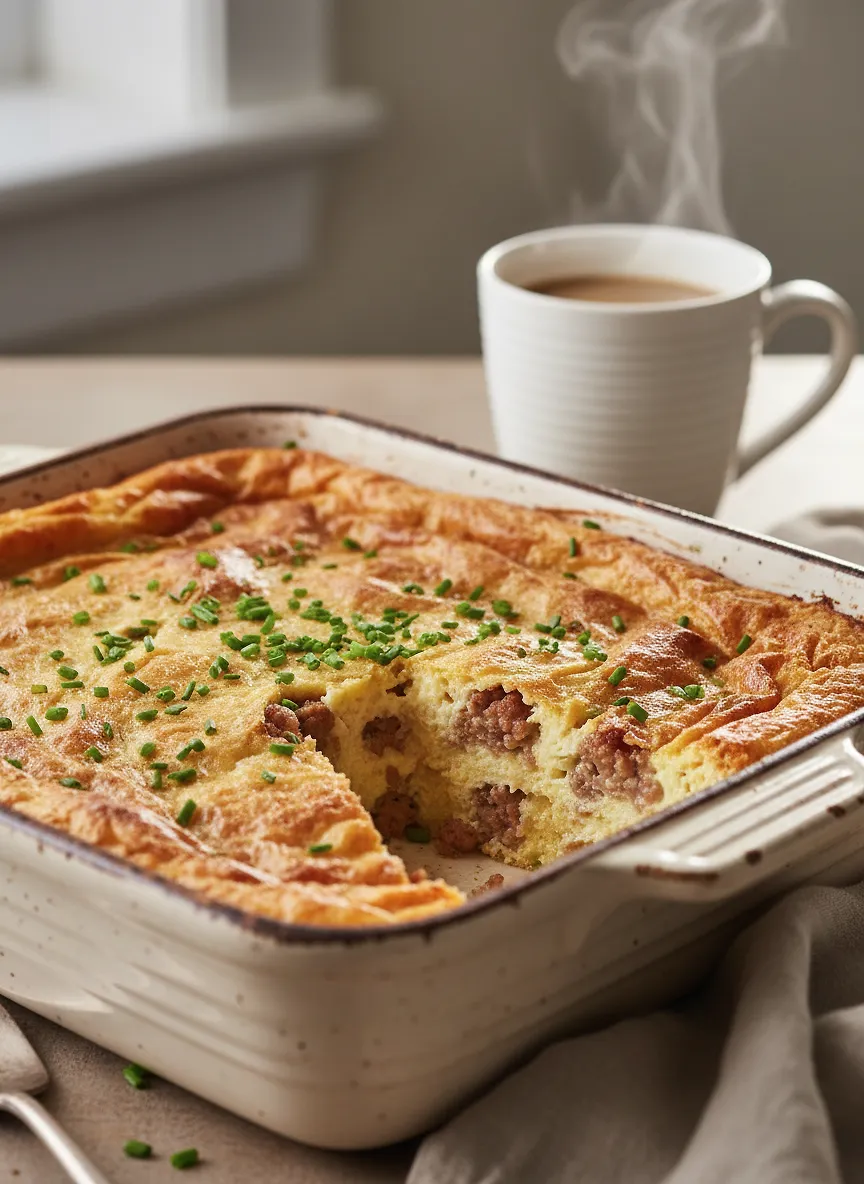
  • The Only Make-Ahead Breakfast Casserole You’ll Ever Need

    The Only Make-Ahead Breakfast Casserole You’ll Ever Need

    There’s a certain magic to holiday mornings, isn’t there? The quiet hum of the house before everyone else is awake, the twinkling lights on the tree, a steaming mug of coffee in my hands. For years, though, that peaceful moment would be short-lived, quickly replaced by the pressure of getting a big, festive breakfast on the table for a house full of hungry family members. I’d be rushing around the kitchen, clanging pans and trying to time eggs, bacon, and toast all at once, while everyone else was relaxing and enjoying each other’s company. I felt like I was missing out on the very memories I was trying to create.

    Then, I discovered the absolute game-changer: the overnight breakfast casserole. And not just any recipe, but this specific, endlessly adaptable one that has become my secret weapon for every holiday, brunch party, and lazy weekend. This isn’t just a recipe; it’s a strategy for a stress-free morning. It’s the key to being a relaxed host who actually gets to sip their coffee while it’s still hot. You do all the work the night before, and in the morning, all you have to do is slide a pan into the oven. The result? A warm, savory, and incredibly satisfying meal that tastes like you spent all morning cooking, even though you were really just enjoying the moment.

    Why This is the Best Make-Ahead Breakfast Casserole for a Crowd

    I know, calling something “the only one you’ll ever need” is a bold claim! But after years of tweaking and testing, I truly believe this formula is foolproof. Here’s why I love it so much:

    • It’s Made for Resting: This isn’t a recipe you can make ahead; it’s a recipe that’s better when you make it ahead. The overnight rest in the fridge is crucial. It gives the bread time to soak up every last drop of the savory egg custard, ensuring there are no dry spots and every single bite is rich and flavorful.
    • It Feeds Everyone: This recipe is designed for a standard 9×13 inch pan, which easily serves 8-10 people. It’s my go-to for Christmas morning, Easter brunch, or whenever we have guests staying over. No more short-order cooking!
    • It’s a Blank Canvas: This is where the real magic happens. The base recipe is absolutely delicious on its own, but it’s also a perfect starting point for your own creativity. You can swap the meats, cheeses, and veggies to your heart’s content. It’s a fantastic way to use up leftover bread or those last few veggies in the crisper drawer.

    The Anatomy of a Perfect Overnight Egg Casserole

    Before we dive into the recipe itself, let’s break down the four key components. Understanding these building blocks is what will empower you to go off-script and create your own signature casserole.

    1. The Foundation: The Bread

    The bread is the base that gives the casserole its structure and wonderful, almost bread-pudding-like texture. The absolute best bread to use is something a day or two old. Stale bread is thirstier and will soak up the custard more effectively without turning to complete mush. I often use a crusty French baguette or a loaf of sourdough. But honestly, almost anything works! I’ve made this with leftover challah (so rich and wonderful), buttery brioche, and even cubed croissants. If you’re feeling ambitious, using cubes of my Easy No-Knead Focaccia Bread adds an incredible rosemary and olive oil flavor that is just divine.

    2. The Heart: The Custard

    The custard is the rich, eggy mixture that binds everything together. My go-to ratio is a simple combination of eggs, milk (whole milk gives the best results), and a bit of heavy cream for extra decadence. The cream is optional, but I find it adds a silky texture that makes the casserole feel extra special. We’ll also season the custard well—this is key to a flavorful final dish!

    3. The Soul: The Fillings

    This is where you get to play! The fillings are what make the casserole sing. You need a good balance of savory, flavorful ingredients. Think cooked breakfast sausage or bacon, sautéed onions and peppers, wilted spinach, or earthy mushrooms. The most important rule here is to always cook your fillings first. Raw vegetables will release too much water during baking, leading to a soggy casserole, and raw meat won’t cook through properly.

    4. The Crown: The Cheese

    What’s a casserole without a glorious, golden-brown cheesy top? The cheese not only adds a ton of flavor but also creates that beautiful crust. A good sharp cheddar is a classic choice, but Gruyère adds a wonderful nutty flavor, Monterey Jack gives you a great cheese-pull, and pepper jack can add a little kick.


    My Go-To Overnight Sausage & Cheddar Breakfast Casserole (Base Recipe)

    Here it is—the recipe that has saved my holiday mornings time and time again. Think of this as your starting point for what I know will become your family’s new favorite tradition. This is the version Gifty Harrison stands by, and I can’t wait for you to try it.

    Prep Time: 25 minutesCook Time: 50-60 minutes
    Chill Time: 8 hours (or overnight)Servings: 8-10

    Ingredients

    • 1 lb bulk breakfast sausage
    • 1 medium yellow onion, chopped
    • 1 loaf (about 1 pound) stale, crusty bread, cut into 1-inch cubes (about 8-10 cups)
    • 2 cups (8 oz) sharp cheddar cheese, shredded
    • 12 large eggs
    • 2 ½ cups whole milk
    • ½ cup heavy cream
    • 1 tsp dry mustard powder
    • 1 tsp salt
    • ½ tsp black pepper
    • Optional: Chopped fresh chives or parsley, for garnish

    Instructions

    1. Cook the Fillings: In a large skillet over medium-high heat, cook the breakfast sausage, breaking it up with a spoon, until browned and cooked through. Add the chopped onion and cook for another 3-5 minutes, until softened. Drain off any excess grease.
    2. Layer the Casserole: Grease a 9×13 inch baking dish. Spread half of the bread cubes in an even layer on the bottom. Sprinkle half of the cooked sausage and onion mixture over the bread, followed by half of the shredded cheddar cheese. Repeat with the remaining bread, sausage mixture, and cheese.
    3. Make the Custard: In a large bowl, whisk together the eggs, milk, heavy cream, dry mustard powder, salt, and pepper until completely combined and slightly frothy.
    4. Assemble and Chill: Slowly and evenly pour the egg mixture over the entire casserole. Press down gently with a spatula to help the bread absorb the liquid. Cover the dish tightly with plastic wrap or a lid and refrigerate for at least 8 hours, or overnight.
    5. Bake: The next morning, preheat your oven to 350°F (175°C). Remove the casserole from the fridge and let it sit on the counter for about 30 minutes to take the chill off. Bake, uncovered, for 50-60 minutes, or until the center is set (a knife inserted in the middle comes out clean) and the top is golden brown and puffy.
    6. Rest and Serve: Let the casserole rest for at least 10 minutes before slicing and serving. This is crucial for it to hold its shape! Garnish with fresh chives or parsley if you like.

    Let’s Make It Your Own: Delicious Variations

    Okay, now for the fun part! Use the base recipe above as your template and start swapping ingredients to create your own perfect overnight egg casserole recipe.

    For the Meat-Lovers

    • Ham & Gruyère: Swap the sausage for 2 cups of diced cooked ham and the cheddar for Gruyère cheese. A pinch of nutmeg in the custard is wonderful here.
    • Bacon & Swiss: Use 1 pound of cooked, crumbled bacon instead of sausage and Swiss cheese instead of cheddar. Sautéed mushrooms are a great addition.
    • Spicy Chorizo & Pepper Jack: Use 1 lb of cooked Mexican chorizo and swap the cheddar for pepper jack cheese. Add a can of diced green chiles (drained) for an extra kick!

    Vibrant Veggie-Packed Options

    To make a vegetarian version, simply omit the meat and increase the veggies to about 3-4 cups total. Remember to cook them first!

    • Spinach, Feta & Sun-Dried Tomato: Sauté 1 chopped onion, then add a 10 oz package of frozen spinach (thawed and squeezed very dry). Use feta cheese instead of cheddar and add ½ cup of chopped, oil-packed sun-dried tomatoes.
    • Mushroom, Kale & Goat Cheese: Sauté 1 lb of sliced mushrooms and a big bunch of chopped kale until wilted. Use crumbled goat cheese and cheddar for a creamy, tangy flavor.
    • Roasted Red Pepper, Onion & Mozzarella: Sauté one chopped onion and two chopped bell peppers. For an even deeper flavor, use jarred roasted red peppers instead—it reminds me of my favorite Creamy Roasted Red Pepper Dip! Pair this with mozzarella and a little Parmesan.

    A quick tip: Having all your spices and dry goods in order makes pulling together recipes like this a total breeze. If your pantry feels a bit chaotic, you might find some helpful ideas in my guide on how to organize a small pantry for efficiency!

    My Final Tips for Casserole Success

    Over the years, I’ve learned a few little things that take this casserole from great to absolutely perfect.

    • Don’t skip the dry mustard. It sounds odd, but it doesn’t make the casserole taste like mustard. It adds a certain tangy depth that brightens up the rich eggs and cheese. It’s my secret ingredient!
    • Grease the dish well. You want every last bit of that casserole to slide out easily. Use butter for the best flavor.
    • Give it a rest—twice! Letting it sit on the counter for 30 minutes before baking helps it cook more evenly. And letting it rest for 10 minutes after baking is non-negotiable. It allows the custard to set, so you can cut clean, beautiful squares that don’t fall apart.

    I truly hope this recipe brings as much ease and joy to your mornings as it has to mine. There is nothing better than waking up knowing that a delicious, crowd-pleasing breakfast is already 90% done. It frees you up to be present, to laugh with your family, and to create those warm, lasting memories that really matter.

    Happy cooking!

    Warmly,
    Gifty

  • The Creamiest Roasted Red Pepper Dip (No Cream Cheese!)

    The Creamiest Roasted Red Pepper Dip (No Cream Cheese!)

    Let me set the scene for you. It was a sunny Saturday afternoon, the kind that just begs for an impromptu get-together. I’d sent out a flurry of texts—“Come over! I’ll make snacks!”—and before I knew it, my quiet afternoon was turning into a full-blown patio party. As I started pulling things from the fridge, a familiar panic began to set in. My friend Sarah, who is allergic to dairy, had just confirmed she was coming. And her new boyfriend, Mark? He’s vegan.

    Suddenly, my go-to creamy, cheesy dips were completely off the table. The spinach and artichoke dip loaded with cream cheese? Nope. The seven-layer dip with sour cream and cheddar? Not a chance. I stared into my pantry, a little defeated, wondering what on earth I could whip up that was both incredibly delicious and welcoming for everyone. I needed something rich, velvety, and satisfying—a dip that didn’t feel like a compromise.

    And that, my friends, is how this recipe was born. Out of a moment of near-panic came a stroke of inspiration. What if I could create that luxurious, creamy texture without a drop of dairy? The answer was right there on my shelf, a humble can of beans that was about to become the hero of our party. This is the story—and the recipe—for the creamiest, dreamiest roasted red pepper dip you will ever taste, and I promise you, you won’t miss the cream cheese one bit.

    A dip that’s as beautiful as it is delicious!

    A Healthy Vegan Party Dip That Steals the Show

    This isn’t just a dip; it’s a conversation starter. The color is so vibrant and inviting, a deep sunset orange-red that just pops on any appetizer platter. But the real magic happens when you take that first bite. It’s smoky and sweet from the roasted peppers, with a lovely savory depth from garlic and a hint of spice. But the texture—oh, the texture!—is what will make you close your eyes and smile. It’s pure velvet. Silky, rich, and utterly luxurious.

    Because we’re skipping the dairy, this dip is naturally a healthy vegan party dip. It’s also gluten-free, packed with fiber and plant-based protein, and made from simple, wholesome ingredients. It’s the kind of food I love to make, the kind that nourishes our bodies while bringing a little bit of joy to the table. This is what Gifty’s kitchen is all about!

    The Secret to Ultimate Creaminess (Without the Cream!)

    So, what’s the secret? What magical ingredient creates this incredible texture? It’s humble, it’s versatile, and you probably have a can in your pantry right now: cannellini beans!

    Yes, beans! Specifically, white beans like cannellini (or even Great Northern beans). When blended, their soft, starchy interiors break down into the most wonderful, creamy paste. They have a very neutral flavor, so they don’t overpower the star of the show—the roasted red peppers. Instead, they provide the perfect blank canvas, a luscious base that makes this dip feel so decadent.

    This is why I’m always encouraging folks to have a well-stocked pantry. When you have staples like canned beans, jarred peppers, and good olive oil on hand, a delicious, homemade appetizer is never more than 10 minutes away. This little trick has saved me on more than one occasion!

    Honestly, keeping a well-stocked pantry makes moments like these so much easier. If you’re looking for inspiration on how to get your own pantry in order, I’ve shared some of my favorite life-changing ways to organize a small pantry that might just help you out.


    Ingredients You’ll Need

    The beauty of this recipe is its simplicity. We’re using a handful of powerful ingredients to create something truly special.

    • Roasted Red Peppers: About 2 large red bell peppers, roasted yourself, or one 12-ounce jar of store-bought roasted red peppers.
    • Cannellini Beans: One 15-ounce can, rinsed and drained well. This is our creamy base!
    • Tahini: About 3 tablespoons. This adds a nutty richness and helps create a smooth emulsion.
    • Garlic: 1-2 cloves, depending on how much you love it. (I always go for two!)
    • Lemon Juice: The juice of half a large lemon (about 2 tablespoons). Fresh is always best for that bright, zippy flavor.
    • Good Quality Extra Virgin Olive Oil: About 3-4 tablespoons, plus more for drizzling on top.
    • Spices: 1 teaspoon of smoked paprika (don’t skip the smoked kind!), ½ teaspoon of ground cumin, and a generous pinch of salt and black pepper.
    • Optional Heat: A pinch of red pepper flakes if you like a little kick.

    How to Make The Creamiest Roasted Red Pepper Dip

    Alright, let’s get to the fun part! Making this dip is so easy, you’ll wonder why you’ve ever bought the store-bought stuff.

    Step 1: Prepare Your Peppers

    You have two paths here, and both lead to deliciousness. Choose your own adventure!

    Option A: Roast Your Own Peppers (The Flavor-Packed Way)
    If you have about 30 minutes, roasting your own peppers is so worth it. The flavor is deeper, smokier, and just incredible. Turn your oven’s broiler on high. Cut your bell peppers in half, remove the stems and seeds, and place them cut-side down on a baking sheet. Pop them under the broiler for 5-10 minutes, watching them closely, until the skins are blackened and blistered. Immediately transfer the hot peppers to a bowl and cover it tightly with plastic wrap. Let them steam for about 15 minutes—this is the secret to making the skins slip right off! Once they’re cool enough to handle, peel away the charred skin, and you’re ready to go.

    Option B: The Jarred Pepper Shortcut (The Weeknight Wonder)
    Hey, I’m a busy home cook, and I have zero shame in using shortcuts that work. Jarred roasted red peppers are a fantastic time-saver! The one and only rule is to drain them well and give them a good rinse to wash away any of the brine, which can sometimes be a bit too salty or vinegary. Pat them dry with a paper towel before adding them to your blender.

    Step 2: Combine and Blend to Velvety Perfection

    This is where the magic happens. In the bowl of a food processor or a high-speed blender, combine your prepared roasted red peppers, the rinsed and drained cannellini beans, tahini, garlic cloves, lemon juice, smoked paprika, cumin, and a good pinch of salt and pepper.

    Now, blend! Start on low and gradually increase the speed. Once it starts to get smooth, slowly drizzle in the olive oil with the motor running. This helps emulsify the dip, making it extra silky and preventing it from separating. Keep blending for a good 2-3 minutes—longer than you think you need to. You want it to be completely, utterly, luxuriously smooth. Scrape down the sides of the bowl once or twice to make sure everything is incorporated.

    Step 3: Taste, Adjust, and Serve

    This is the most important step in any recipe! Dip a spoon (or a carrot stick) in and have a taste. What does it need? A little more salt to make the flavors pop? A bit more lemon juice for brightness? A dash more smoked paprika for smokiness? A pinch of red pepper flakes for heat? This is your dip—make it perfect for you.

    Once it tastes amazing, transfer it to a serving bowl. I love to use the back of a spoon to create a beautiful swirl on top, then drizzle with a little more extra virgin olive oil and sprinkle with fresh parsley or toasted pine nuts for a final flourish.


    How to Serve Your Roasted Red Pepper Dip

    The possibilities are endless! This creamy roasted red pepper dip without cream cheese is the ultimate team player.

    • With Bread: It’s absolutely divine served with a warm, fluffy bread for dipping. My easy no-knead focaccia bread for beginners is the perfect companion for this dip. Toasted pita bread or crusty baguette slices are also fantastic.
    • With Veggies: For a lighter, healthier option, serve it with an array of fresh, crunchy vegetables. Cucumber spears, carrot sticks, celery, and colorful bell pepper strips are all wonderful.
    • As a Spread: Don’t just think of it as a dip! It’s an incredible spread for sandwiches and wraps. It adds a huge boost of flavor and moisture, and it’s a much healthier alternative to mayonnaise.
    • As a Topping: Dollop it on top of grilled chicken, fish, or roasted vegetables. I’ve even been known to serve a spoonful alongside my fail-proof Dutch oven chicken and vegetables to add a pop of color and flavor.

    Quick Recipe Reference

    IngredientAmountNotes
    Roasted Red Peppers12 oz (or 2 large)Use jarred (rinsed) or roast your own.
    Cannellini Beans1 (15 oz) canRinse and drain well.
    Tahini3 TbspAdds creaminess and nutty flavor.
    Garlic1-2 clovesUse more or less to your taste.
    Lemon Juice2 TbspFreshly squeezed is best!
    Extra Virgin Olive Oil3-4 TbspDrizzle in while blending.
    Smoked Paprika1 tspThe ‘smoked’ part is key!
    Ground Cumin1/2 tspAdds earthy depth.
    Salt & PepperTo tasteAdjust after blending.
    A quick look at your shopping list!

    That impromptu party turned out to be one of the best afternoons we’d had in a long time. And the dip? It was gone in minutes. Sarah was so happy to have a creamy, delicious option she could enjoy without worry, and Mark was thrilled with the flavorful vegan snack. Everyone else just couldn’t believe it was made from beans!

    This recipe is a reminder that homemade cooking doesn’t have to be complicated to be impressive, and that accommodating our loved ones can lead to the most wonderful kitchen discoveries. I hope you’ll give this dip a try and see just how easy it is to bring a little bit of creamy, dreamy, dairy-free goodness into your own home.

    Happy cooking,
    Gifty

  • 10 Life-Changing Ways to Organize a Small Pantry

    That Feeling When You Open the Pantry Door… and Sigh

    Let’s be honest for a moment. Have you ever stood in front of your pantry, ready to whip up a delicious meal, only to be met with a jumble of half-empty bags, precariously stacked cans, and a mysterious sticky spot on the back shelf? You open the door, and instead of inspiration, you feel a wave of… well, dread. If you’re nodding along, please know you are not alone! I have been there more times than I can count.

    For me, Gifty, cooking is all about joy, creativity, and love. It’s my mission to bring that feeling into every kitchen. But a chaotic pantry can suck the joy right out of the process. It turns a creative adventure into a frustrating scavenger hunt. I remember one particularly memorable afternoon when a precariously balanced bag of flour decided to give up the ghost, creating a white cloud that settled over everything. It was my breaking point. I knew something had to change.

    That flour explosion was the beginning of my journey to master my small-but-mighty pantry. It wasn’t about achieving Pinterest-perfect, color-coded perfection (though it does look lovely!). It was about creating a system that worked for me, making it easier to find what I need, see what I have, and ultimately, spend less time searching and more time cooking. These aren’t just small kitchen organization ideas; they are strategies that will genuinely make your life easier and bring the fun back into your food prep. So, roll up your sleeves, put on some good music, and let’s tackle that pantry together!


    1. The Great Pantry Empty-Out

    I know, I know. This is the step everyone wants to skip, but I promise you, it’s the most important one. You cannot organize clutter. You have to start with a clean slate. Take a deep breath and pull everything out of your pantry. Yes, everything. Set it all out on your counters or your dining table. It’s going to look overwhelming for a minute, but trust the process. This is the first, most crucial step toward pantry peace.

    2. The Ruthless (but Necessary) Declutter

    With everything out in the open, it’s time to sort. Grab a trash bag and a box for donations. Go through every single item and ask yourself:

    • Is it expired? Be ruthless! That can of water chestnuts from 2018 has got to go.
    • Will I honestly ever use this? That jar of specialty olives you bought for one recipe two years ago? If you haven’t used it by now, you probably won’t. Let it go.
    • Do I have multiples? If you discovered you have four half-used bottles of soy sauce, consolidate them if you can, or at least group them together so you use them up before buying more.

    While you’re at it, give those shelves a good wipe-down. There’s nothing better than starting with a sparkling clean space.

    3. Embrace Clear Containers

    This was an absolute game-changer for me. Decanting dry goods like flour, sugar, oats, pasta, and rice into clear, airtight containers is one of the best things you can do for pantry efficiency. Why? First, you can see exactly how much you have at a glance, so you’re less likely to run out mid-recipe. Second, it keeps food fresher for longer. And third, it just looks so wonderfully tidy and cohesive!

    You don’t need to buy the most expensive set, either. I’ve found great options at home goods stores and even supermarkets. Knowing I have all the ingredients I need, clearly visible and ready to go, makes whipping up a batch of my easy no-knead focaccia bread for beginners feel effortless.

    4. Label Everything (Like You Mean It)

    Now that your goods are in beautiful clear containers, don’t skip this step! You might think you’ll remember which white powder is baking soda and which is cornstarch, but in the heat of a cooking moment, mistakes can happen. A simple label is your best friend. I love using a simple label maker for a clean look, but a chalk marker on a reusable label or even masking tape and a sharpie works just as well. The goal is clarity, not perfection.

    5. Create Smart Zones

    Think of your pantry like a tiny supermarket with aisles designed for efficiency. Grouping similar items together into “zones” will change the way you cook. Instead of scanning the entire pantry for cumin, you’ll just go to your “Spices & Seasonings” zone. This is the heart of how to organize a small pantry for efficiency.

    My Favorite Pantry Zones:

    • Baking Zone: Flours, sugars, baking soda/powder, chocolate chips, vanilla extract.
    • Weeknight Warriors: Pasta, rice, quinoa, canned tomatoes, broths, and beans.
    • Oils & Vinegars: Keep all your cooking oils, vinegars, and sauces together.
    • Breakfast Station: Oats, cereals, pancake mix, syrup, and honey.
    • Snacks: A designated basket or shelf for crackers, nuts, and granola bars.

    6. Go Vertical! Use Every Inch

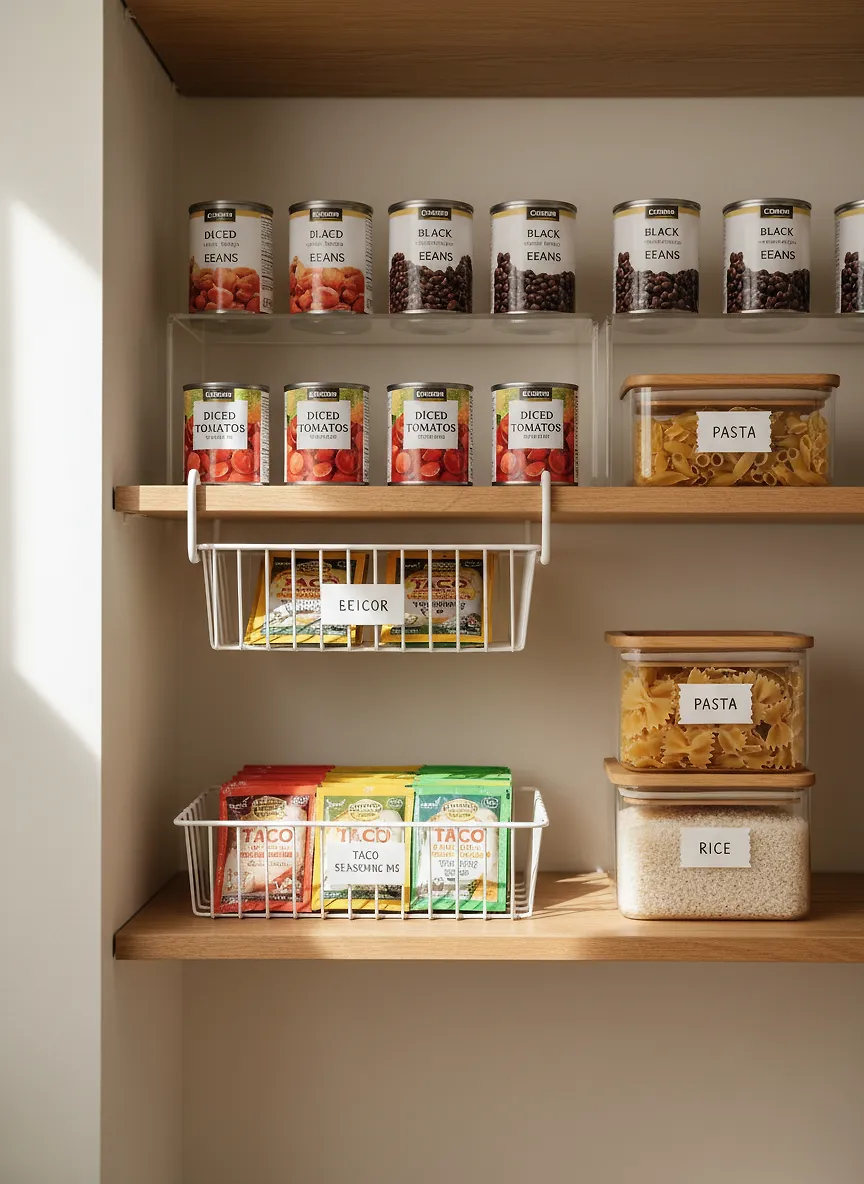
    In a small pantry, vertical space is gold. Most pantries have a lot of wasted air between shelves. It’s time to claim that space! Shelf risers are a miracle for doubling your storage for cans and jars. Under-shelf baskets can hold packets and small bags. And stackable bins are perfect for creating modular, customized storage. Look up, look down—there’s probably space you’re not using.

    7. Don’t Forget the Door

    The back of your pantry door is prime real estate! An over-the-door organizer is one of the best investments for a small kitchen. It’s the perfect place for spices (so you can actually see them all!), small jars of jam, packets of seasoning, and other small items that tend to get lost on a deep shelf. It frees up so much shelf space and puts your most-used seasonings right at your fingertips.

    8. Baskets and Bins Are Your Best Friends

    For all those items that don’t fit neatly into clear containers—think bags of chips, pouches of tuna, seasoning packets, or extra boxes of tea—bins and baskets are the answer. Instead of a jumble of loose items, you have one neat basket. When you need something, you just pull the whole basket out, grab what you need, and slide it back in. It’s like creating little drawers on your shelves. I use a wire basket for all my potatoes, onions, and garlic—it keeps them contained and allows for air circulation.

    9. Implement a “First In, First Out” (FIFO) System

    This sounds technical, but it’s incredibly simple and it’s a practice restaurants use to reduce waste. When you buy a new can of tomatoes, put it at the back of the tomato row and slide the older cans to the front. This ensures you’re always using up the older items first, which means less food waste and less money wasted. It’s a small habit that makes a big difference, especially when you’re stocking up on staples like chicken broth and canned vegetables for cozy dinners like my fail-proof Dutch oven chicken and vegetables recipe.

    An organized pantry isn’t about having a perfect-looking space. It’s about creating a functional, joyful space that makes you want to cook.

    10. The 10-Minute Tidy-Up

    Okay, so you’ve done all the hard work. Your pantry is a beacon of organization and efficiency. How do you keep it that way? The secret is maintenance. Organization is not a one-and-done event; it’s an ongoing practice. But it doesn’t have to be a chore! Once a week, or whenever you put new groceries away, take just 10 minutes to tidy up. Put things back in their proper zones, decant that new bag of rice, and wipe up any spills. This small, consistent effort prevents the chaos from creeping back in and keeps your system working beautifully.


    Your Kitchen Sanctuary Awaits

    Opening my pantry door is a completely different experience now. There are no more avalanches or frustrating searches. Instead, I feel a sense of calm and possibility. I can see the ingredients I have, and my mind immediately starts dreaming up new recipes and flavor combinations.

    I truly believe that creating an organized, functional space is an act of self-care. It paves the way for more creativity, less stress, and a whole lot more joy in the kitchen. I hope these tips empower you to transform your own pantry from a source of stress into a source of inspiration.

    Happy organizing, and happy cooking!

    Warmly,
    Gifty

  • My Easy No-Knead Focaccia Bread for Beginners

    My Easy No-Knead Focaccia Bread for Beginners

    Hello, lovely people! Gifty here. I want to let you in on a little secret. For the longest time, the idea of baking bread from scratch absolutely terrified me. The yeast, the kneading, the precise rising times… it all felt like a very complicated science experiment I was destined to fail. I imagined sad, dense, brick-like loaves and a kitchen covered in a sticky, floury mess. Can you relate?

    But then, I discovered the magic of no-knead bread. And more specifically, this life-changing, incredibly forgiving, and utterly delicious easy no knead focaccia bread for beginners. This isn’t just a recipe; it’s a permission slip to bake amazing bread without the stress. It’s the recipe that made me fall head-over-heels in love with bread baking, and I just know it will do the same for you.

    This homemade focaccia recipe relies on time, not effort. It’s a simple mix-and-wait situation that results in a light, airy, chewy bread with a crispy, golden, olive-oil-rich crust. We’re talking about that iconic dimpled top, those glorious little pools of olive oil, and the intoxicating aroma of freshly baked bread filling your home. Forget everything you thought you knew about difficult bread. Today, we’re making something wonderful together.

    Why This No-Knead Method is Pure Magic

    So, how can you make bread without kneading? It sounds like it breaks all the rules, right? Well, the secret is a long, slow fermentation. When you mix flour, water, yeast, and salt, you’re creating the perfect environment for gluten to develop.

    Kneading is just a way to speed up that process, to manually stretch and align those gluten strands to create structure. But with a no-knead recipe, we simply let time do all the heavy lifting. Over a period of 12 to 18 hours, the yeast works its slow magic, and those gluten strands develop all on their own. This slow process doesn’t just build structure; it also develops an incredible depth of flavor that you just don’t get from a quick-rise loaf. The result is a complex, flavorful, and beautifully textured bread with minimal hands-on time. It’s the ultimate kitchen hack!

    Gather Your Simple Ingredients

    One of the best things about this recipe is that you probably have most of what you need in your pantry already. No fancy equipment or hard-to-find ingredients here!

    • All-Purpose Flour: Good old all-purpose flour works perfectly. You can also use bread flour for an even chewier texture, but it’s not necessary.
    • Instant Yeast: I use instant yeast because you can mix it right in with the dry ingredients. If you only have active dry yeast, just be sure to dissolve it in the warm water for about 5 minutes before adding it to the flour.
    • Lukewarm Water: You want it to feel like a warm bath—not too hot, not too cold. Around 105-115°F (40-46°C) is the sweet spot. Too hot and you’ll kill the yeast; too cold and it will be very slow to activate.
    • Fine Sea Salt: Salt is crucial for flavor and for controlling the yeast’s activity.
    • Extra Virgin Olive Oil: This is a star player! We use it in the dough, to coat the pan, and for drizzling on top. Use a good quality olive oil that you enjoy the taste of, as its flavor will really shine through.
    • Flaky Sea Salt & Toppings: For that perfect finish! Flaky sea salt (like Maldon) is a must for me. We’ll talk more about other fun toppings below.

    Let’s Bake! Your Step-by-Step Homemade Focaccia Recipe

    Step 1: Mix the Dough (The 5-Minute Job)

    In a large bowl, whisk together the flour, instant yeast, and fine sea salt. Pour in the lukewarm water and about 2 tablespoons of olive oil. Using a spatula or wooden spoon, mix until everything is just combined and no dry streaks of flour remain. The dough will be wet, sticky, and shaggy—this is exactly what you want! Don’t be tempted to add more flour. Cover the bowl tightly with plastic wrap or a reusable cover and let it sit on your counter at room temperature.

    Step 2: The First Rise (The Long Wait)

    Now for the easy part: walk away. Let the dough rise at room temperature for 12 to 18 hours. The timing is very flexible. You’ll know it’s ready when the surface is dotted with bubbles, it has at least doubled in size, and the dough looks stringy and web-like when you pull a bit of it up.

    My Personal Anecdote: The first time I made this, I got so impatient around the 8-hour mark. The dough had risen a bit, and I thought, “This must be enough!” I baked it, and while it was okay, it lacked that airy, bubbly texture I was dreaming of. The next time, I forced myself to wait the full 18 hours. The difference was astonishing! The dough was alive, jiggly, and full of air. That’s when I learned that with no-knead bread, patience truly is the most important ingredient.

    Step 3: The Second Rise (In the Pan)

    Pour about 2-3 tablespoons of olive oil into a 9×13 inch baking pan, making sure to coat the bottom and sides generously. Gently scrape the bubbly, jiggly dough out of the bowl and into the center of the pan. It will feel delicate and full of air. Don’t punch it down! Pour another tablespoon of olive oil over the top of the dough. Gently stretch and press the dough toward the edges of the pan. It might not reach all the way—that’s fine. It will relax and spread as it rests.

    Cover the pan loosely and let the dough rise in a warm spot for another 1 to 2 hours, or until it looks puffy.

    Step 4: Dimple and Top (The Fun Part!)

    Preheat your oven to 425°F (220°C). Uncover your puffy dough. Drizzle a little more olive oil over the top and also coat your fingertips with oil. Now, channel your inner piano player! Press your fingertips straight down into the dough, all the way to the bottom of the pan, creating those signature dimples all over the surface. Be firm but gentle. This feels so satisfying!

    This is the time to add your toppings. Sprinkle generously with flaky sea salt and fresh rosemary leaves. If you’re using olives or tomatoes, gently press them into the dimples.

    Step 5: Bake to Golden Perfection

    Bake for 20-25 minutes, or until the top is a deep golden brown and the edges are crispy. You might hear it sizzling in the pan—that’s the sound of success! Once it’s out of the oven, you can drizzle it with one final, glorious splash of olive oil if you’re feeling decadent. Let it cool in the pan for about 10 minutes before transferring it to a wire rack to cool completely (or, let’s be honest, to cool just enough so you don’t burn your mouth when you tear into it).

    My Favorite Focaccia Toppings

    The classic rosemary and sea salt is divine, but don’t be afraid to get creative! Here are a few of my go-to combinations:

    • The Classic: Fresh rosemary sprigs, flaky sea salt, and a generous drizzle of olive oil.
    • Mediterranean Dream: Pitted Kalamata olives, halved cherry tomatoes, and a sprinkle of dried oregano.
    • Garlic & Herb: Thinly sliced garlic cloves (press them into the dough so they don’t burn) and a mix of fresh thyme and parsley.
    • Cheesy Delight: Grated Parmesan or crumbled feta cheese added in the last 5-10 minutes of baking.

    How to Serve Your Beautiful Bread

    Honestly, the best way to serve this is to tear off a warm piece and eat it as is. But it’s also incredibly versatile! Cut it into squares to serve alongside a big salad, dip it into a hearty soup, or use it as the base for a truly epic sandwich.

    One of my absolute favorite pairings is serving this focaccia with a comforting one-pan meal. It’s absolutely perfect for sopping up all the incredible pan juices from my Fail-Proof Dutch Oven Chicken and Vegetables Recipe. The combination of the juicy chicken, roasted veggies, and the soft, olive-oil-soaked bread is pure comfort food heaven.

    Gifty’s Tips for Perfect Focaccia Every Time

    Just a few extra thoughts from my kitchen to yours!

    1. Don’t Skimp on the Oil: This is not the time to be shy with olive oil! It’s what gives focaccia its signature crispy bottom and rich flavor.
    2. Embrace the Stickiness: The high hydration (the amount of water) is what makes the dough so airy. Resist the urge to add more flour. A wet, sticky dough is a happy dough.
    3. Room Temperature Matters: A very cold kitchen will slow down your rise time, while a very warm one will speed it up. Just keep an eye on the dough and look for the visual cues (doubled in size, lots of bubbles).
    4. Storage: If you have leftovers (which is a big ‘if’!), store the focaccia in an airtight container or wrapped in plastic at room temperature for up to 2 days. You can refresh it in a warm oven for a few minutes to bring back some of that crispness.

    I truly hope this recipe demystifies bread baking for you and brings a little bit of joy and deliciousness into your kitchen. There is something so deeply rewarding about pulling a golden, fragrant loaf of your own bread from the oven. It connects us to our food and to generations of home cooks who came before us. You can do this. I promise.

    If you make this focaccia, please let me know! Tag me in your photos on social media—I absolutely love seeing your creations.

    Happy Baking,
    Gifty

  • My Fail-Proof Dutch Oven Chicken and Vegetables Recipe

    My Fail-Proof Dutch Oven Chicken and Vegetables Recipe

    I still remember the days when making a “proper” dinner felt like a full-scale kitchen invasion. You know the scene: one pan for the chicken, another for the potatoes, a steamer for the broccoli, and a mountain of dishes piling up in the sink before we’d even sat down to eat. It was chaotic, and honestly, it sometimes stole the joy right out of cooking for my family. But then, everything changed. I was gifted a beautiful, heavy-bottomed Dutch oven for my birthday, and it sat on my stovetop for a week, looking both gorgeous and incredibly intimidating. I finally decided to be brave. I found a basic recipe, tossed a whole chicken and some root vegetables inside, and hoped for the best. An hour later, the most incredible aroma filled my entire home. When I lifted that heavy lid, I was met with a sight that truly felt like magic—a perfectly golden, juicy chicken surrounded by tender, flavorful vegetables, all swimming in a rich, savory broth they had created together. It was a revelation! That one pot produced a meal more delicious than any of my frantic, multi-pan creations. It was the ultimate one pot chicken dinner, and I was hooked. Today, I want to share my refined, go-to, absolutely fail-proof version of that magical meal. This is the recipe I turn to on chilly evenings, busy weeknights, or lazy Sundays. It’s comforting, endlessly adaptable, and makes you feel like a kitchen superstar with minimal effort. So, grab your Dutch oven (or any heavy, oven-safe pot), and let’s make something wonderful together.

    Why a Dutch Oven is a Game-Changer

    So, what’s the big deal with a Dutch oven? Why not just use a regular roasting pan? It really comes down to one thing: moisture and heat. The heavy, tight-fitting lid traps steam inside, creating a humid environment that braises the vegetables and keeps the chicken incredibly moist and tender. At the same time, the thick cast iron walls distribute heat evenly, ensuring everything cooks perfectly without hot spots. It’s like a mini-oven inside your oven, and it does all the hard work for you.

    This isn’t just a recipe; it’s a method. Once you master this, you’ll be able to create endless variations with whatever you have on hand. It’s the gift of a delicious, low-stress meal that keeps on giving.

    How to Make Dutch Oven Chicken and Vegetables: The Step-by-Step Guide

    Alright, let’s get to the good stuff! This process is simple and straightforward. We’re going to build layers of flavor right in the pot, from searing the chicken to sautéing the aromatics in the rendered fat. Trust the process—it’s worth every step.

    Step 1: Prepare the Chicken for a Golden, Crispy Skin

    This first step is the absolute, non-negotiable secret to getting that crispy, golden skin we all dream of. Take your whole chicken (around 3.5 to 4 pounds is perfect) and pat it dry with paper towels. And I mean, really dry. Get into all the nooks and crannies. Moisture is the enemy of crispiness! Next, we season. Be generous! In a small bowl, mix together your salt, black pepper, smoked paprika, garlic powder, onion powder, and dried herbs (I love a mix of thyme and rosemary). Drizzle the chicken with a little olive oil, which will act as a binder, and then rub that glorious seasoning mix all over—top, bottom, and sides. If you’re feeling fancy, gently lift the skin over the breast and thighs and push some of the seasoning underneath. This seasons the meat directly and makes it even more flavorful.

    Step 2: Get That Perfect Sear

    Place your Dutch oven over medium-high heat and add a tablespoon of olive oil. Once the oil is shimmering, carefully place your chicken in the pot, breast-side down. You should hear a satisfying sizzle! Let it sear, undisturbed, for about 5-7 minutes, until the skin is deeply golden brown. Don’t poke or move it around too much. Then, using a pair of sturdy tongs, flip the chicken over and sear the other side for another 5 minutes. This step isn’t about cooking the chicken through; it’s about creating the Maillard reaction. That’s just a science-y way of saying we’re developing a deep, savory, roasted flavor and a beautiful color. Once both sides are seared, carefully transfer the chicken to a plate and set it aside. Don’t you dare clean that pot!

    Step 3: Build Your Flavorful Vegetable Base

    Look inside your Dutch oven. See all those browned bits (that’s called “fond”) and the rendered chicken fat? That is pure gold. Reduce the heat to medium and toss in your chopped onion. Sauté for about 4-5 minutes, scraping up those browned bits with a wooden spoon as the onion releases its moisture. Add the minced garlic and cook for another minute until fragrant—be careful not to let it burn! Now, pour in your chicken broth (or white wine, if you prefer!) to deglaze the pan. This will lift all the remaining flavor from the bottom of the pot and create the beginnings of your incredible sauce. Bring it to a simmer, then turn off the heat. It’s time to add the rest of your veggies. Tumble in the potatoes, carrots, and celery, and toss them in that beautiful liquid. I like to tuck a few sprigs of fresh rosemary or thyme in there, too.

    Step 4: The Slow-Cook Magic

    Finally, nestle your seared chicken right on top of that bed of vegetables, breast-side up. Squeeze the lemon half over everything—the chicken and the veggies. This little bit of acid brightens everything up beautifully. Pop the lid on, and slide the whole thing into a preheated 400°F (200°C) oven. Let it cook for about 60 minutes. Then, remove the lid and cook for another 15-20 minutes. This last uncovered stretch is what helps that skin get extra crispy and golden. The chicken is done when an instant-read thermometer inserted into the thickest part of the thigh (without touching bone) reads 165°F (74°C). The vegetables should be perfectly tender and fork-soft.

    My Favorite Tips for Success

    Over the years, I’ve learned a few things that take this one pot chicken dinner from great to absolutely spectacular. My friends always ask how I do it, and honestly, the secrets are simple!

    Tip #1: For Guaranteed Crispy Skin

      Dry, Dry, Dry: I know I said it before, but it bears repeating. Patting the chicken completely dry is the most important step. Uncover at the End: Don’t skip the final 15-20 minutes of cooking without the lid. This allows the direct oven heat to hit the skin, crisping it to perfection. A Quick Broil: If, for some reason, your skin isn’t as crispy as you’d like, you can carefully place the Dutch oven under your oven’s broiler for 2-3 minutes at the very end. Watch it like a hawk—it can go from golden to burnt in seconds!

    Tip #2: Swapping Seasonal Veggies (Make It Your Own!)

    This is where you can really get creative. The potatoes and carrots are a classic base, but feel free to substitute or add based on what’s in season. This is a Gifty Harrison staple—using what’s fresh and available!
      Autumn/Winter: Butternut squash, parsnips, Brussels sprouts (add these for the last 30 minutes of cooking), or sweet potatoes are all fantastic. Spring: Asparagus spears and new potatoes. Add the asparagus for the last 15-20 minutes so they don’t get mushy. Summer: Zucchini chunks, bell peppers, or even whole cherry tomatoes work well. Add these softer vegetables about halfway through the cooking time.

    Fail-Proof Dutch Oven Chicken and Vegetables Recipe

    Ingredients

    1 whole chicken(3.5-4 lbs)
    1 tbsp olive oil
    1 large yellow onionchopped
    4-5 cloves garlicminced
    1.5 lbs potatoes(Yukon Gold or red), cut into 1.5-inch chunks
    4 large carrotspeeled and cut into 1-inch chunks
    2 celery stalkscut into 1-inch chunks
    1/2 cup chicken brothor dry white wine
    1 lemonhalved
    3-4 sprigs fresh rosemary or thyme

    For the Spice Rub:

    1.5 tbsp salt
    1 tsp black pepper
    1 tsp smoked paprika
    1 tsp garlic powder
    1 tsp onion powder
    1 tsp dried thyme or rosemary

    Instructions

      Preheat your oven to 400°F (200°C). Pat the chicken completely dry with paper towels. In a small bowl, combine all the spice rub ingredients. Rub the chicken all over with olive oil, then generously season with the spice mix. Heat 1 tbsp of olive oil in a large Dutch oven over medium-high heat. Sear the chicken, breast-side down, for 5-7 minutes until golden brown. Flip and sear the other side for 5 minutes. Transfer the chicken to a plate. Reduce heat to medium. Add the chopped onion to the pot and sauté for 4-5 minutes, scraping up the browned bits. Add the minced garlic and cook for 1 more minute until fragrant. Pour in the chicken broth to deglaze the pan, stirring to release any stuck-on flavor. Turn off the heat. Add the potatoes, carrots, celery, and fresh herb sprigs to the pot and toss to combine. Place the seared chicken, breast-side up, on top of the vegetables. Squeeze the juice from half a lemon over the entire dish. Cover the Dutch oven with its lid and transfer to the preheated oven. Bake for 60 minutes. Remove the lid and continue to bake for another 15-20 minutes, or until the chicken skin is crispy and golden, and a thermometer inserted into the thigh reads 165°F (74°C). Let the chicken rest in the pot for 10 minutes before carving. Serve warm, spooning the delicious pan juices over everything.

    There you have it. A complete, soul-warming meal all from one pot. The chicken is fall-off-the-bone tender, the vegetables are infused with flavor, and the pan juices are just begging to be sopped up with a piece of crusty bread. It’s a meal that feels both rustic and elegant, and the best part is the minimal cleanup! For me, this dish is more than just food. It’s the smell that greets my family at the door, the warmth that fills our kitchen, and the simple joy of gathering around a meal made with love. I hope it brings that same happiness to your table. Happy cooking, Gifty